Thattamangalam Service Cooperative Bank
| Project Name | Thattamangalam Service Cooperative Bank |
| Location | Thattamangalam, Palakkad, Kerala |
| Year of Design | 2018 |
| Type | Residential |
| Status | Completed |
| Design Team | Ar.Rakesh Kakkoth, Ar.Goutham Padmanabhan,Ar. Suraj S, Ar. Albert |
| Size | 4168 Sq. ft |
| Photography | Ar.Althaf(IKSHA) |
| Contractor | Labour contract |
| Award | Nominated to Vanitha Veedu Award 2025 |
Award Category: Commercial
Project Name: Thattamangala Service Cooperative Bank
Architectural Studio: Studio Acis
Architect: Ar. Rakesh Kakkoth
Contact No.: +91 94976 06116
Email ID: studioacisarchitects@gmail.com
Project Location: Thattamangalam, Palakkad, Kerala
Completion Date: March 2025
Built-up Area: 387.3 sqm
Plot Area: 5 cents
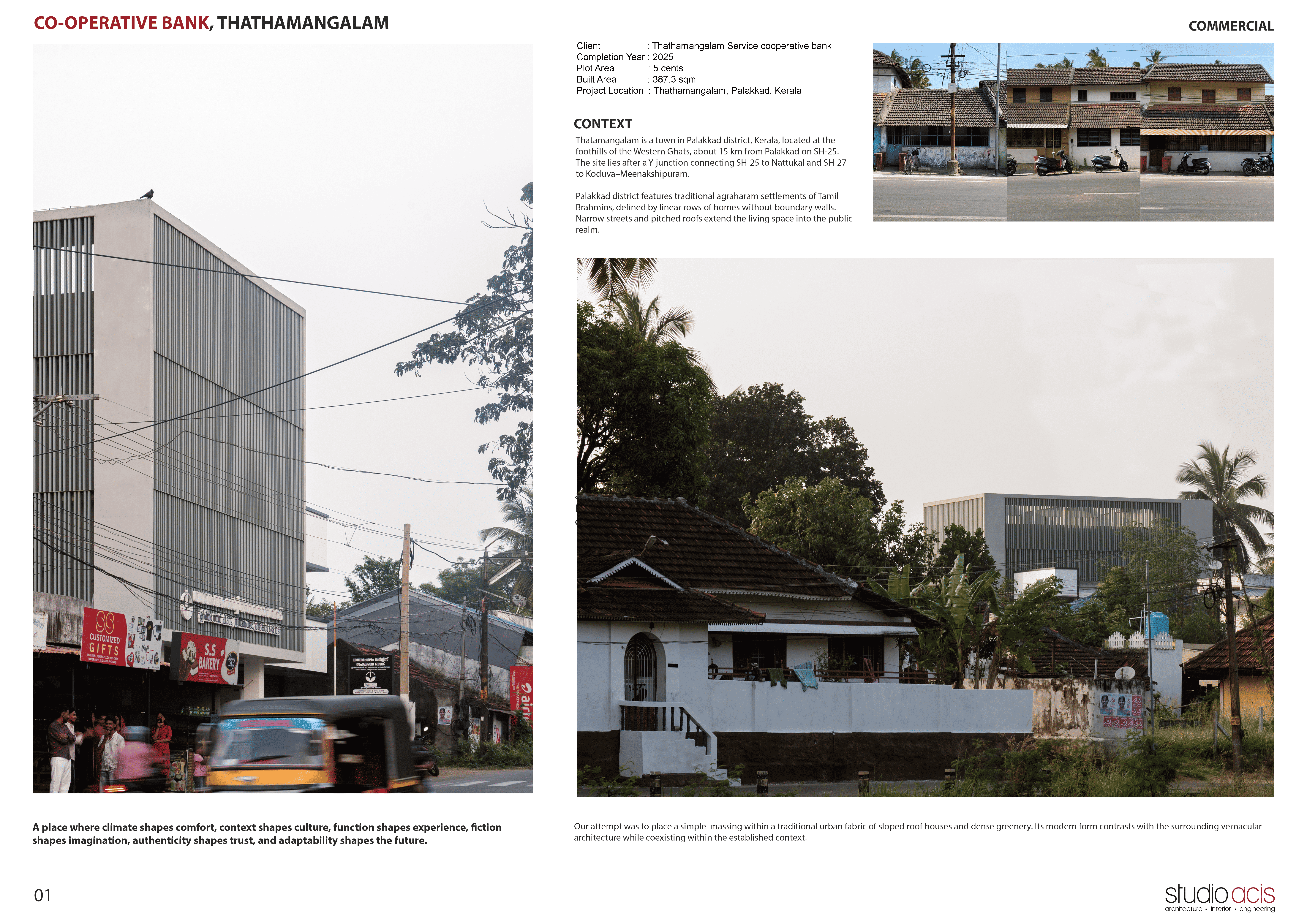
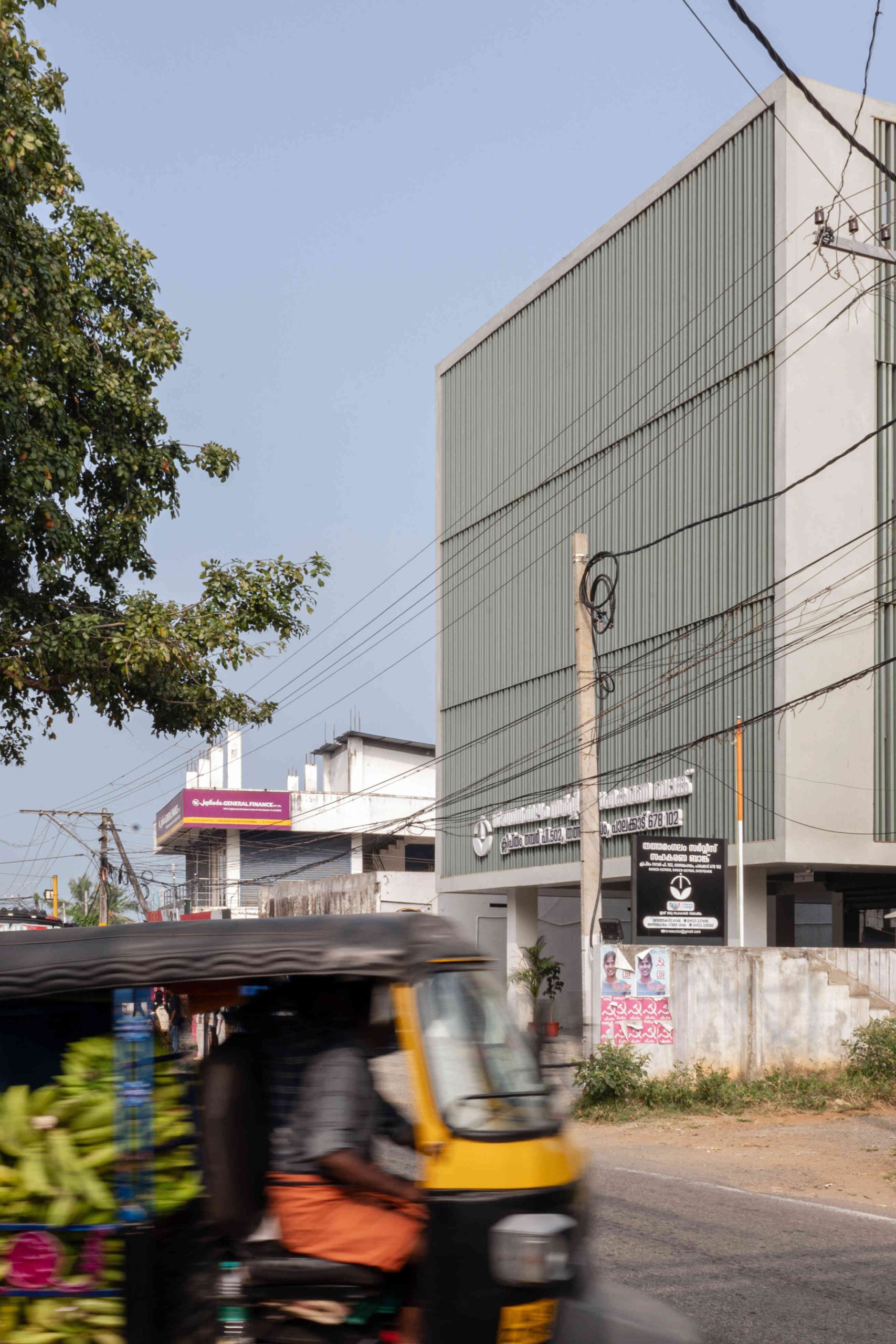
Thattamangalam is a town in the Palakkad district of Kerala, located at the foothills of the Western Ghats. The site is situated beyond a Y-junction connecting SH-25 towards Nattukal and SH-27 towards Koduva-Meenakshipuram.
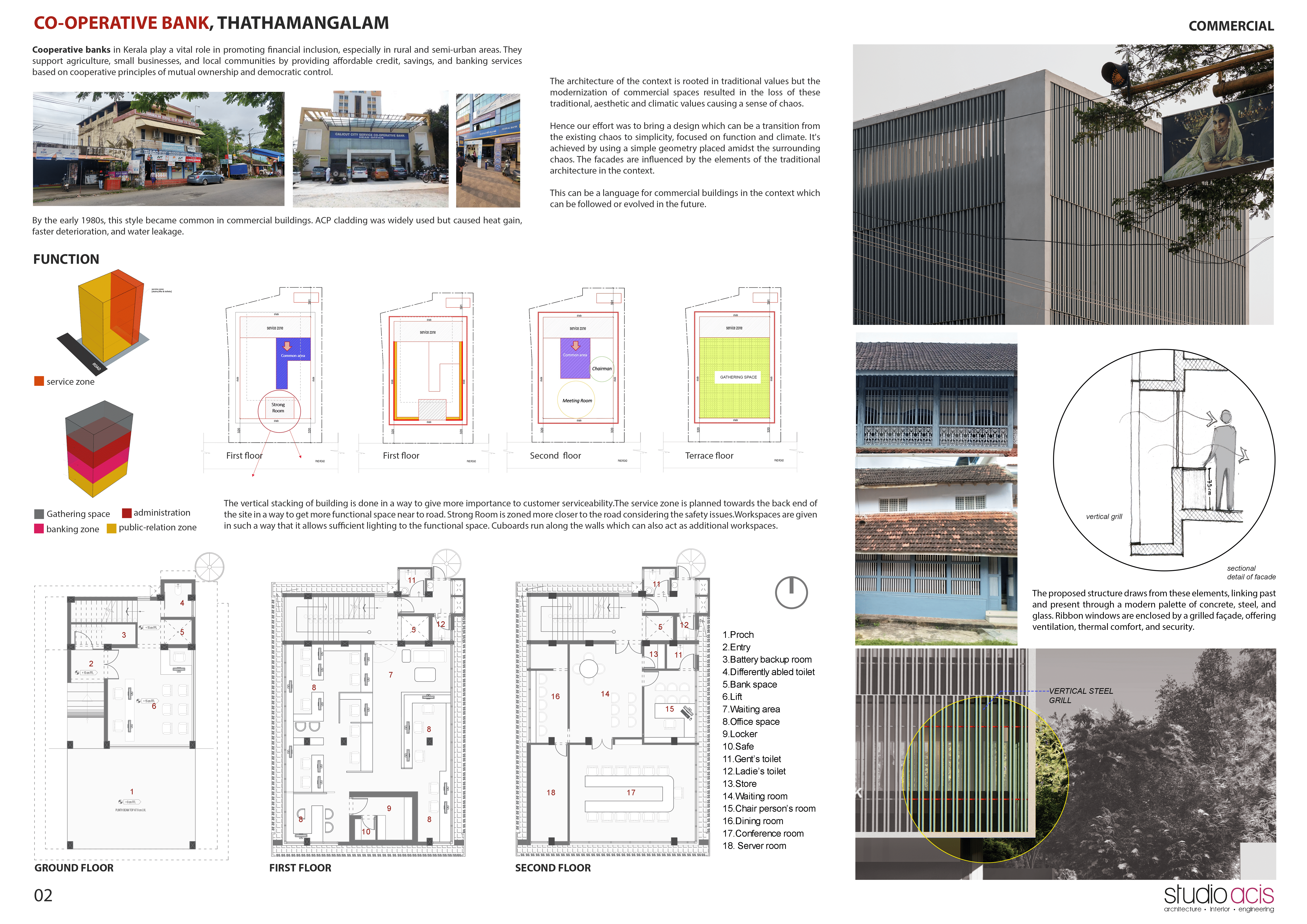
The project involves the design of a new building for the Thattamangalam Service Cooperative Bank. Cooperative banks in Kerala play a vital role in promoting financial inclusion, especially in rural and semi-urban areas. They support agriculture, small businesses, and local communities by providing affordable credit, savings, and banking services based on cooperative principles of mutual ownership and democratic control.
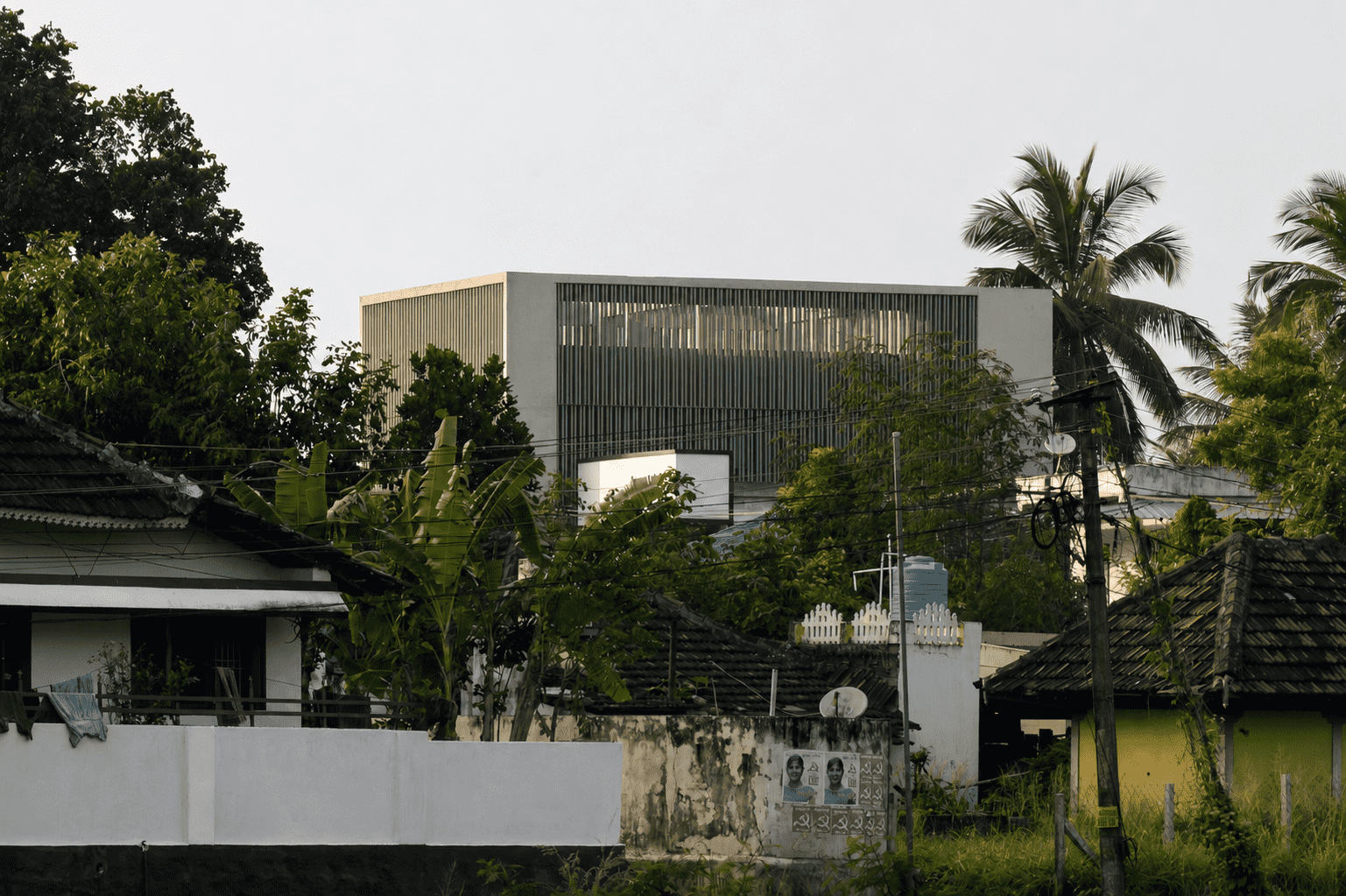
Recognizing the social and cultural importance of a cooperative bank, The design aims to create an architecture that the local community can relate to and claim as their own, while addressing the loss of contextual sensitivity in contemporary commercial development. While the regional architecture is deeply rooted in traditional values, rapid modernization of commercial buildings in the area has led to the loss of these climatic, aesthetic, and contextual qualities, resulting in visual and spatial chaos.
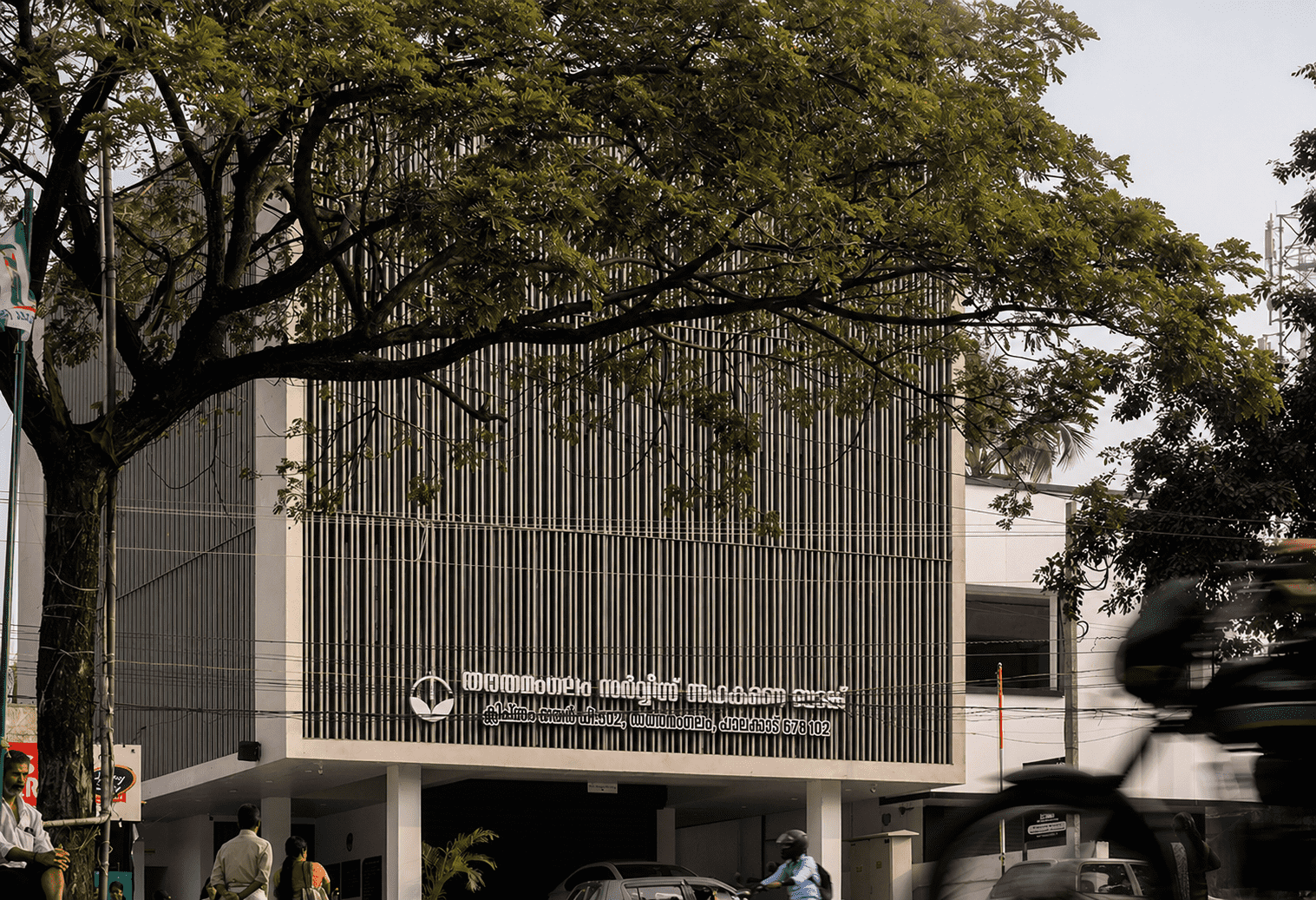
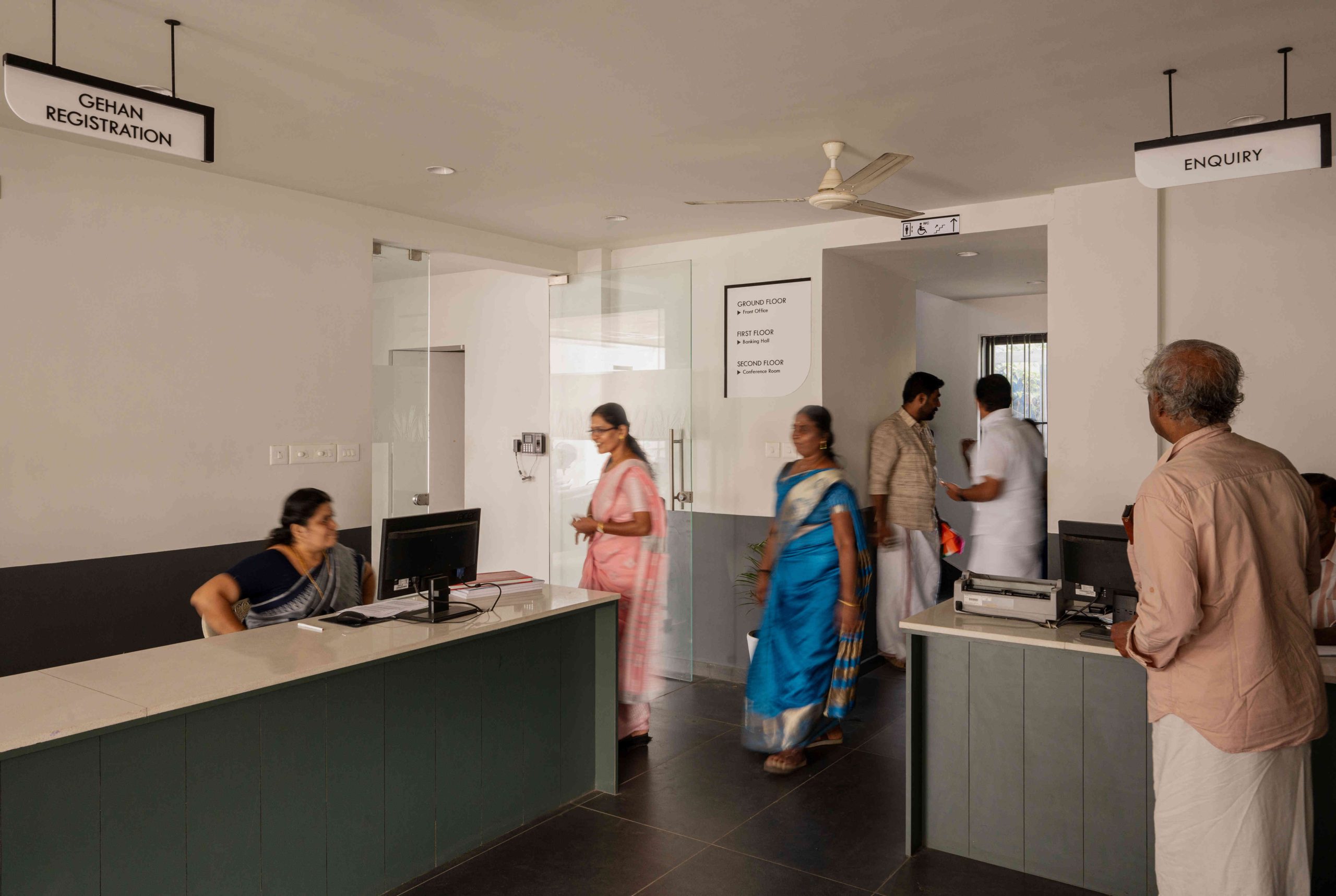
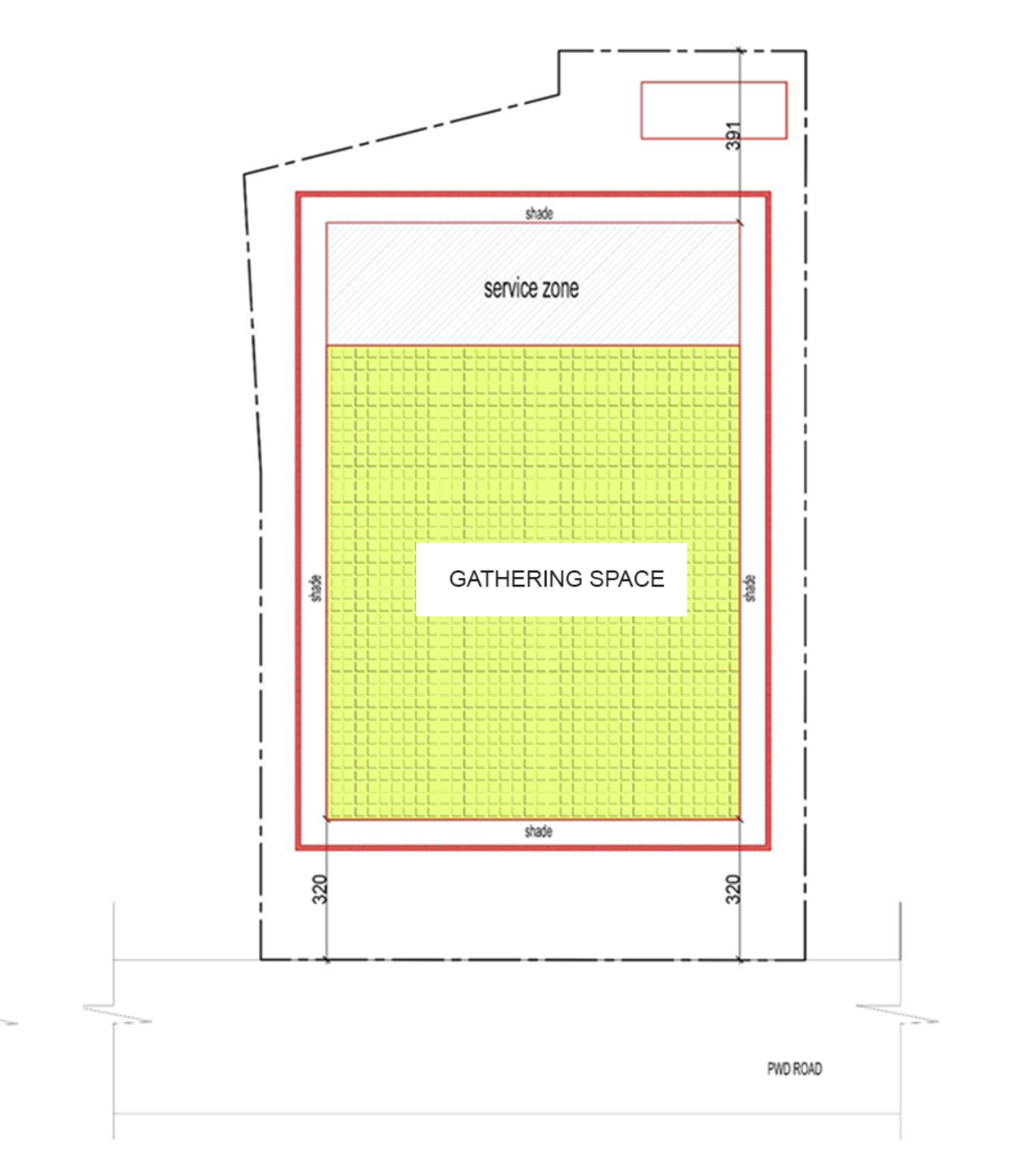
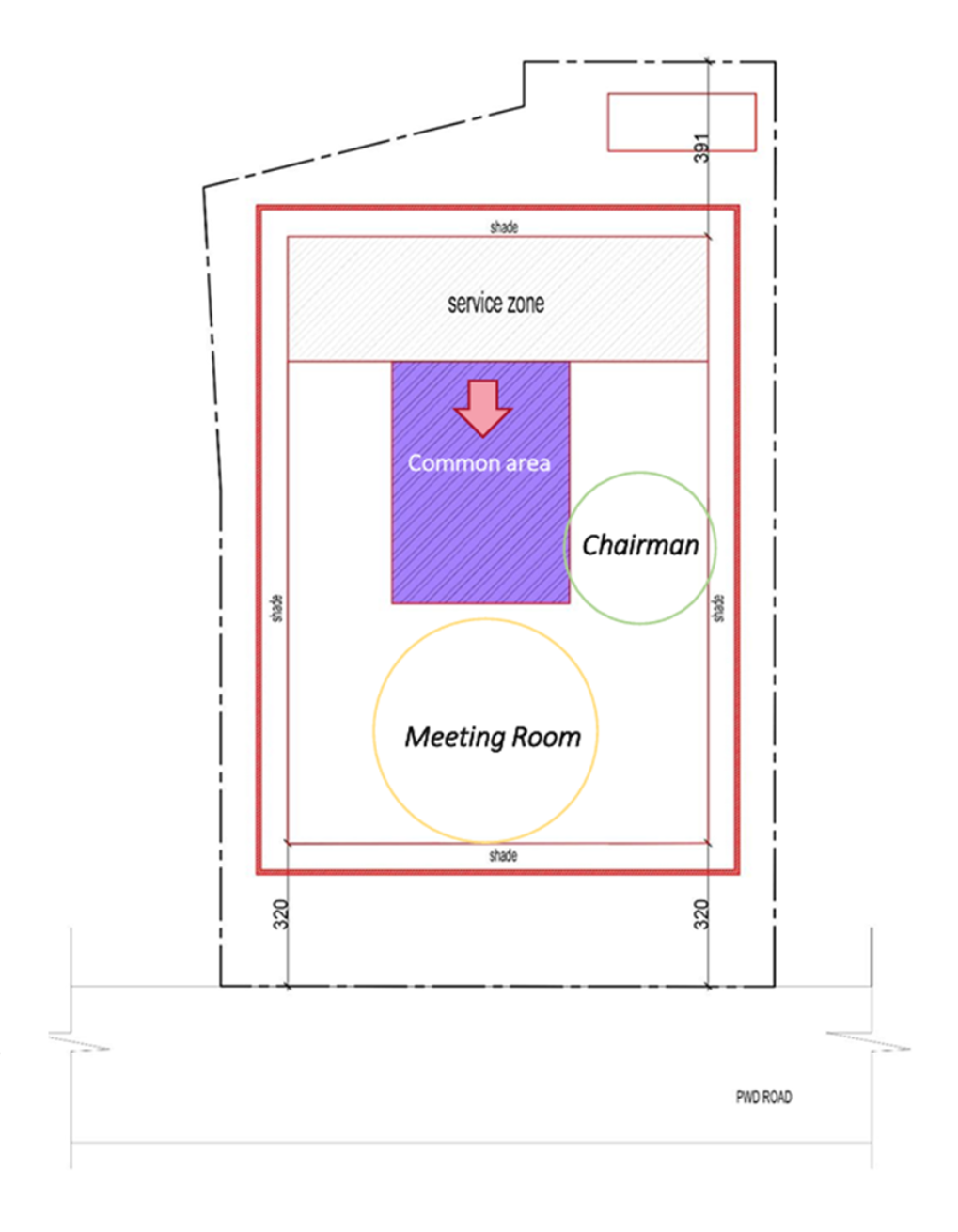
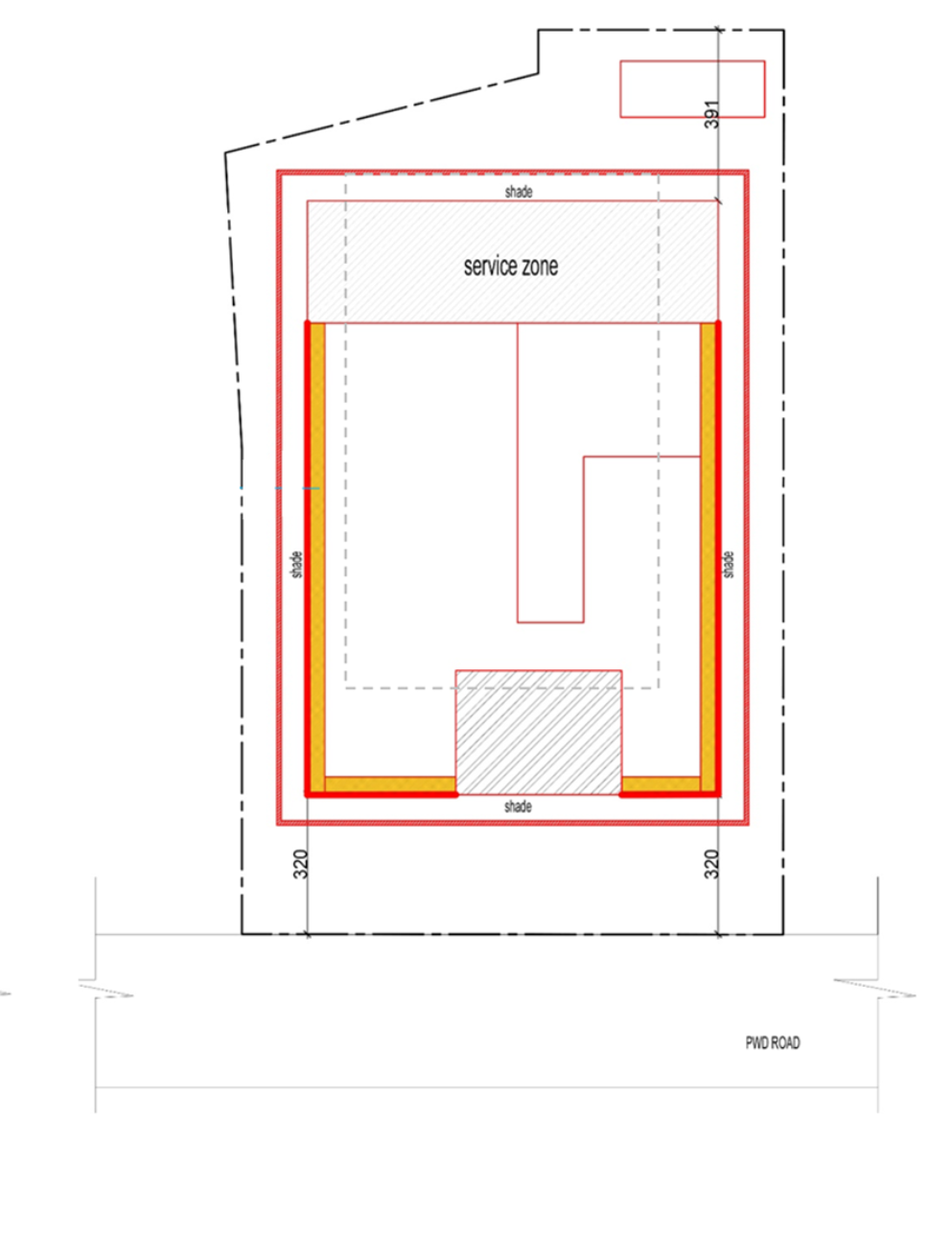
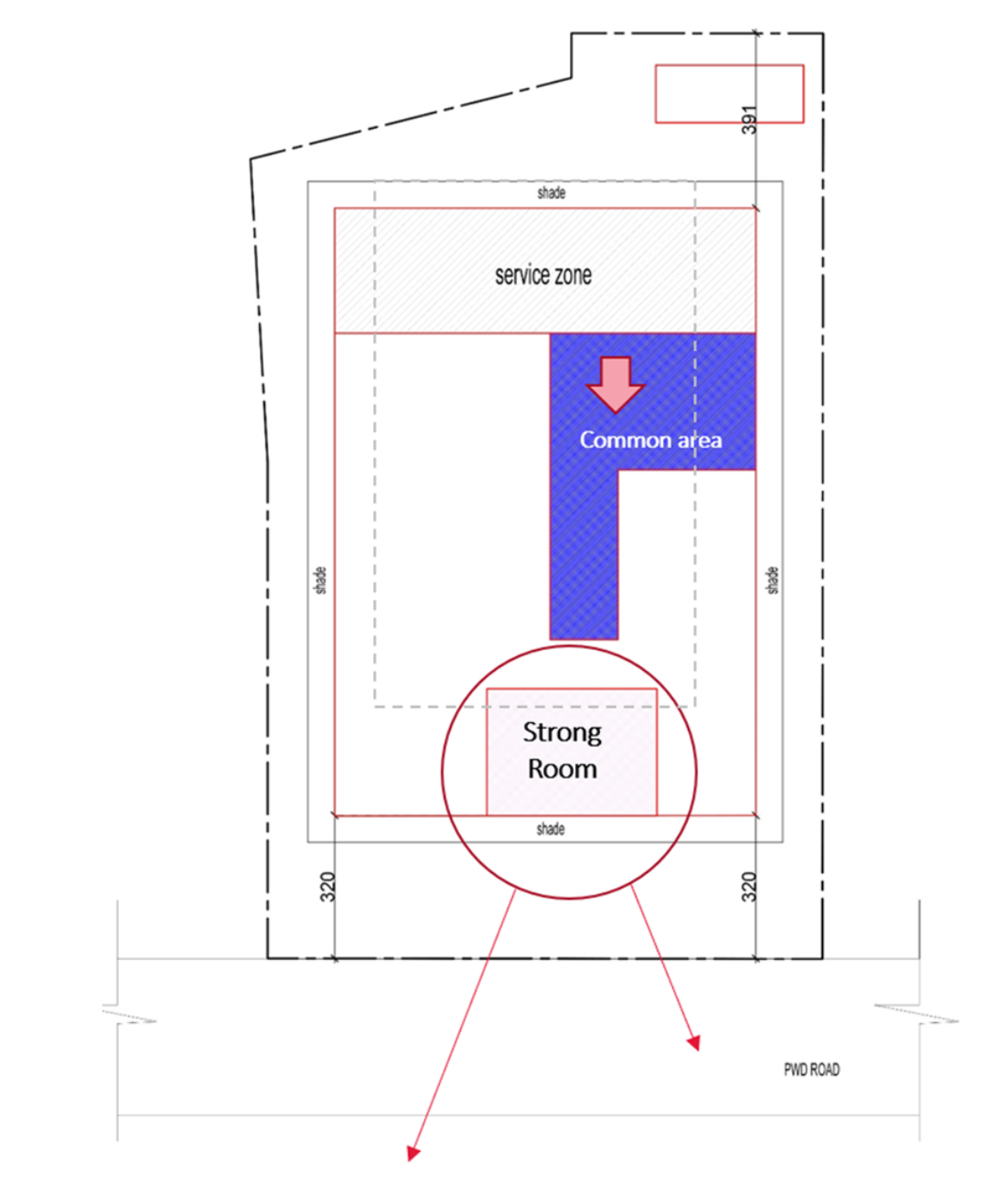
The design seeks to act as a transition-from this existing chaos towards simplicity-by prioritizing function, climate responsiveness, and clarity. This is achieved through the use of simple, restrained geometry that stands calm and legible amidst the surrounding complexity. Planned on a 5 cent plot, the building is vertically stacked with a clear hierarchy, giving prominence to customer service areas. Service zones are placed towards the rear of the site to maximize functional and accessible spaces along the road edge. The ground floor functions as the public relations zone, while the first and second floors accommodate banking and administrative activities. A multipurpose gathering space is provided on the terrace level, allowing for community gatherings and events.
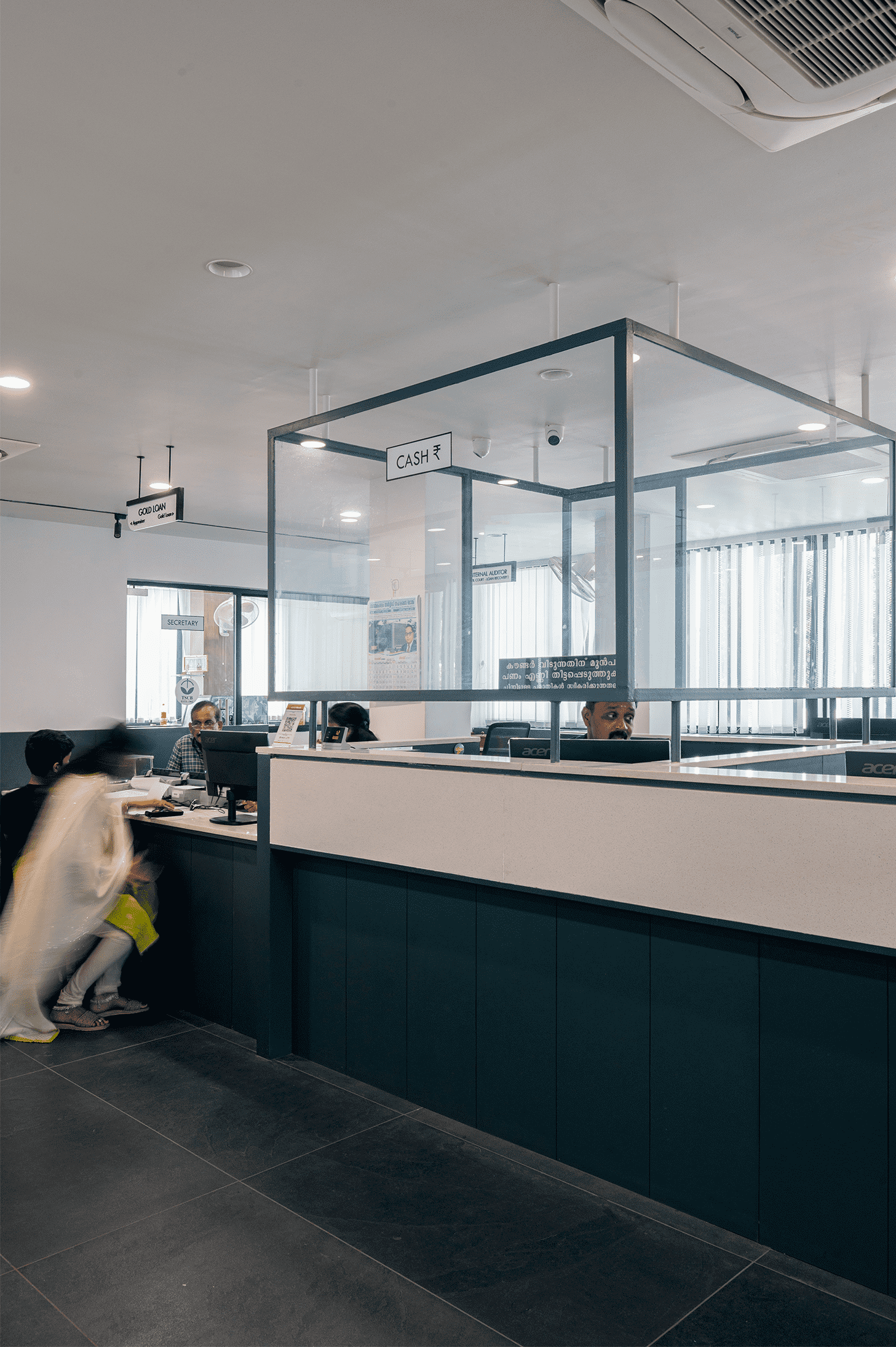
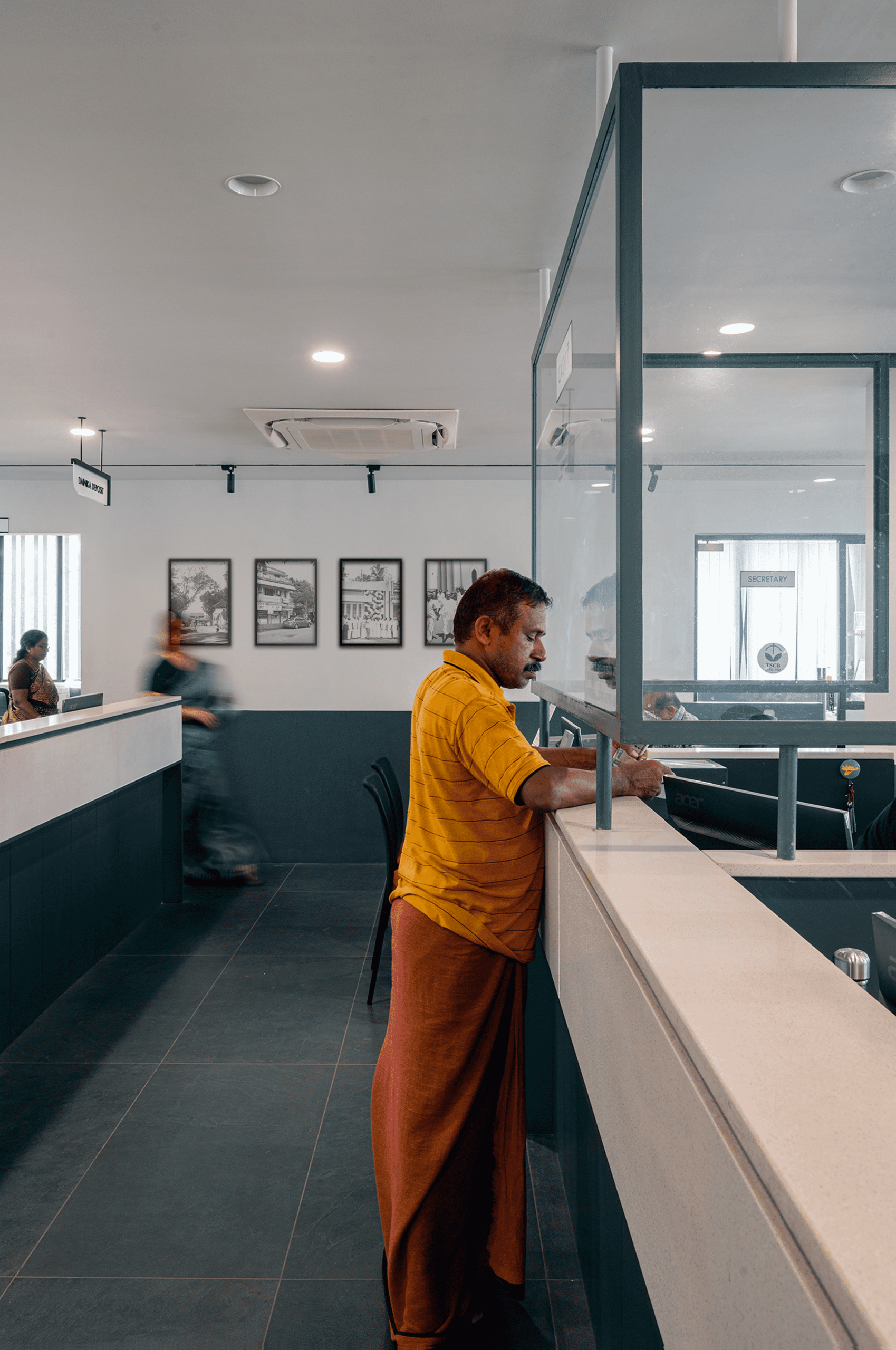
Flexibility and adaptability are key considerations in the internal planning. Continuous ribbon windows are provided above a 75 cm ledge wall along the functional spaces, ensuring ample natural light while maintaining privacy. Workspaces are organized to optimize daylight penetration, and storage cupboards integrated along the ribbon windows double as additional work surfaces when required.The interiors adopt a restrained and minimal material palette, where black flooring is offset by dark green storage units and crisp white workstations, establishing a calm, focused, and professional atmosphere. To reinforce visual continuity and spatial coherence, the walls are finished in black up to the height of the ledge, allowing the functional elements to read as a unified and uninterrupted plane throughout the interior spaces.
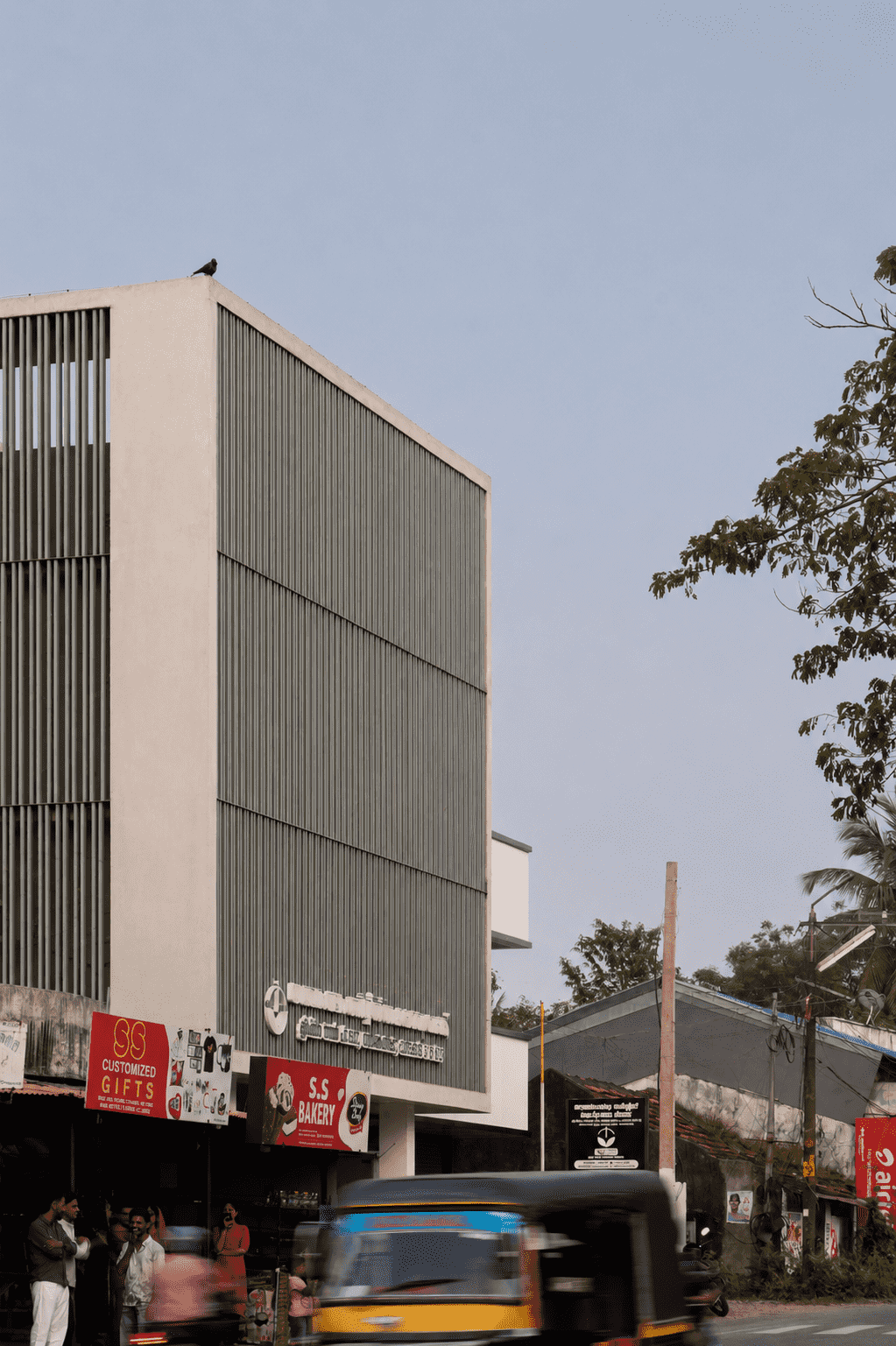
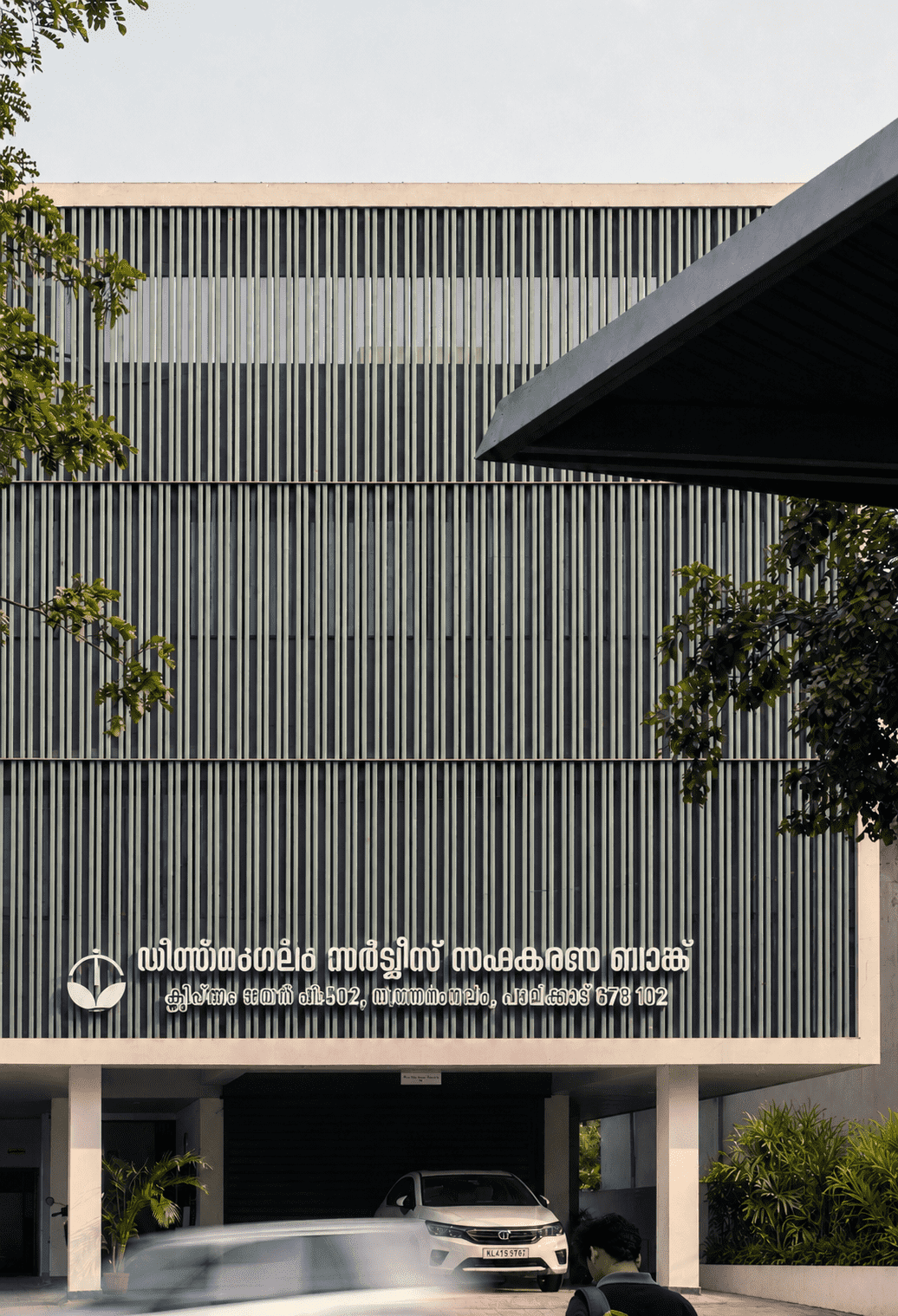
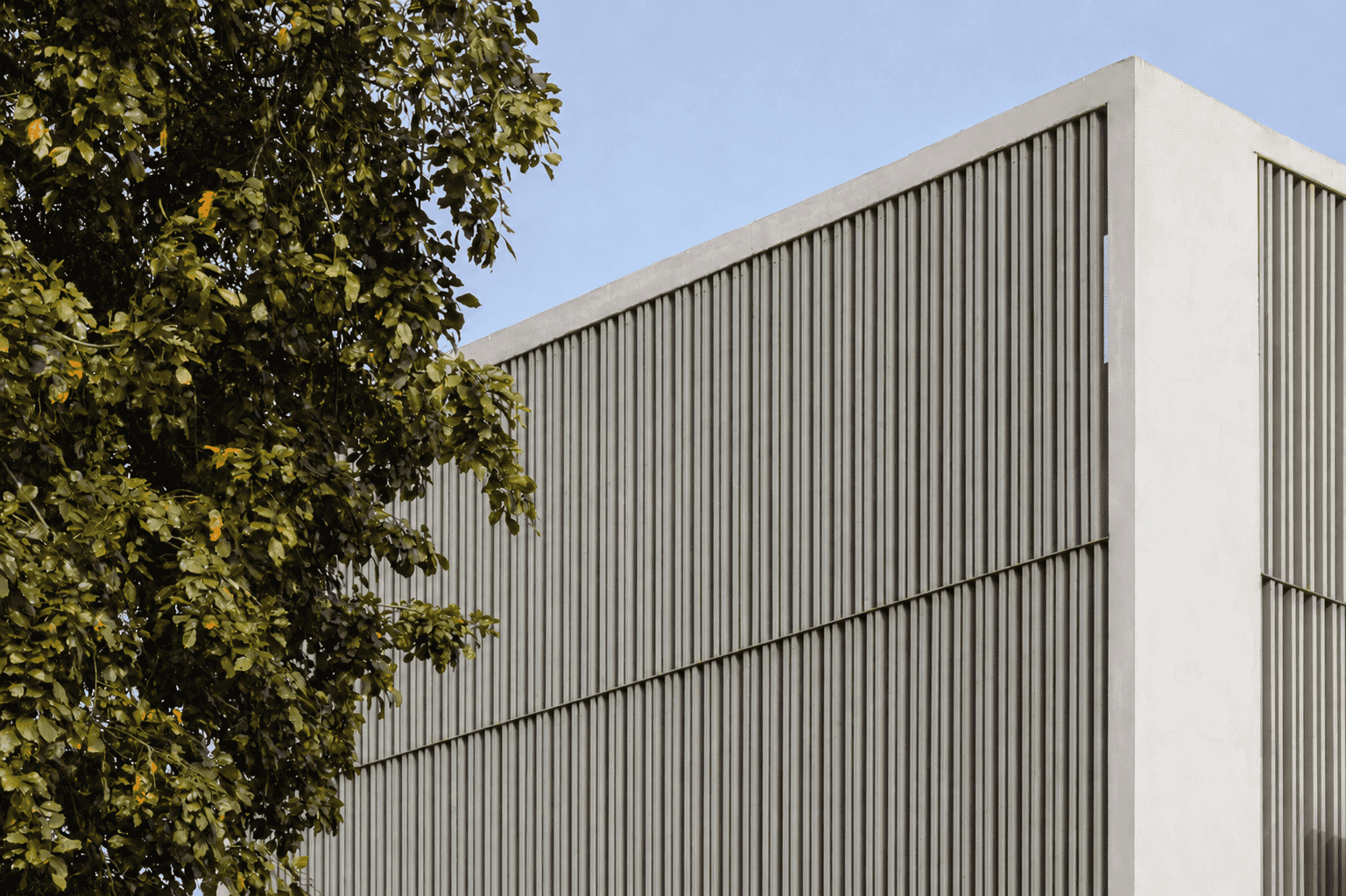
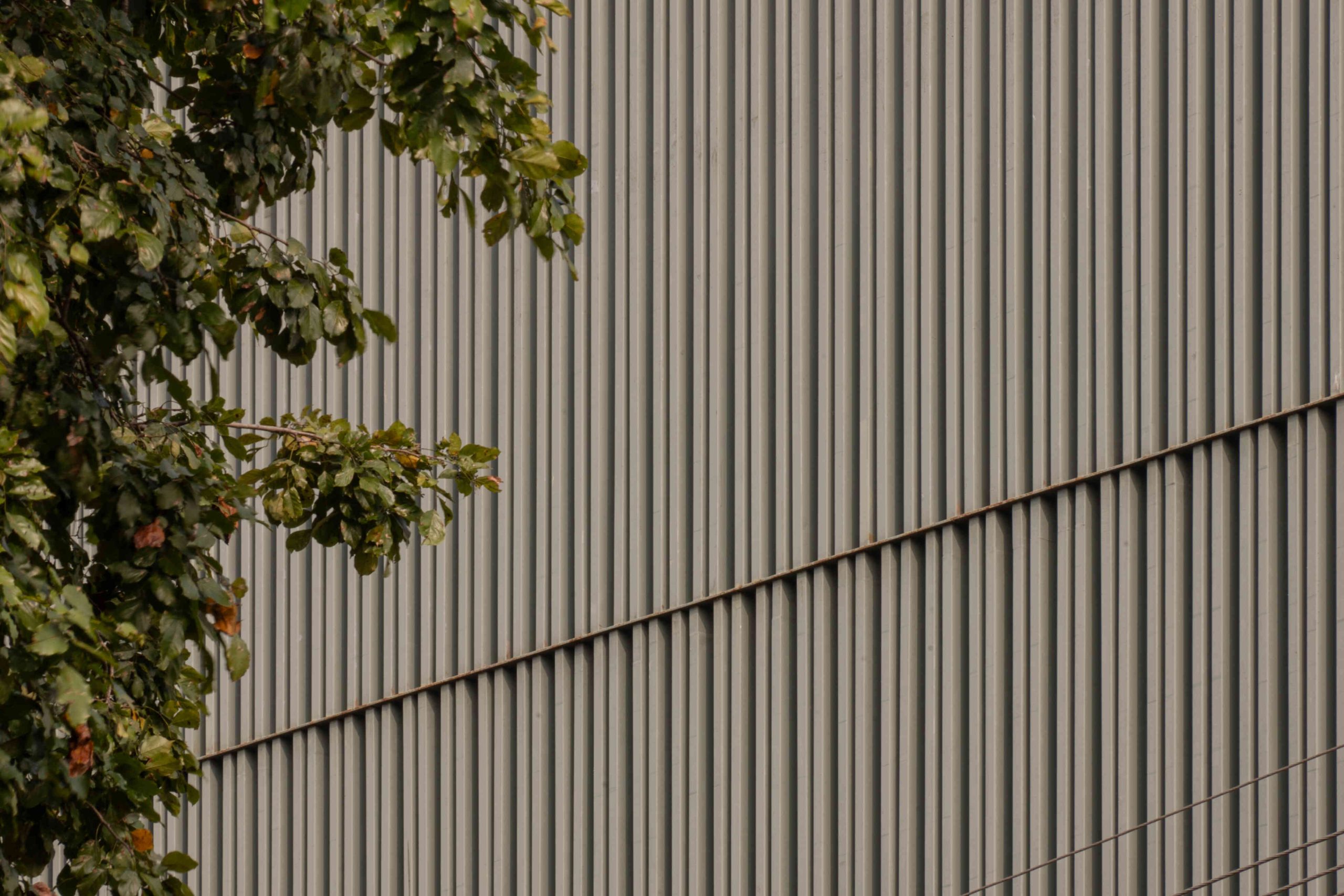
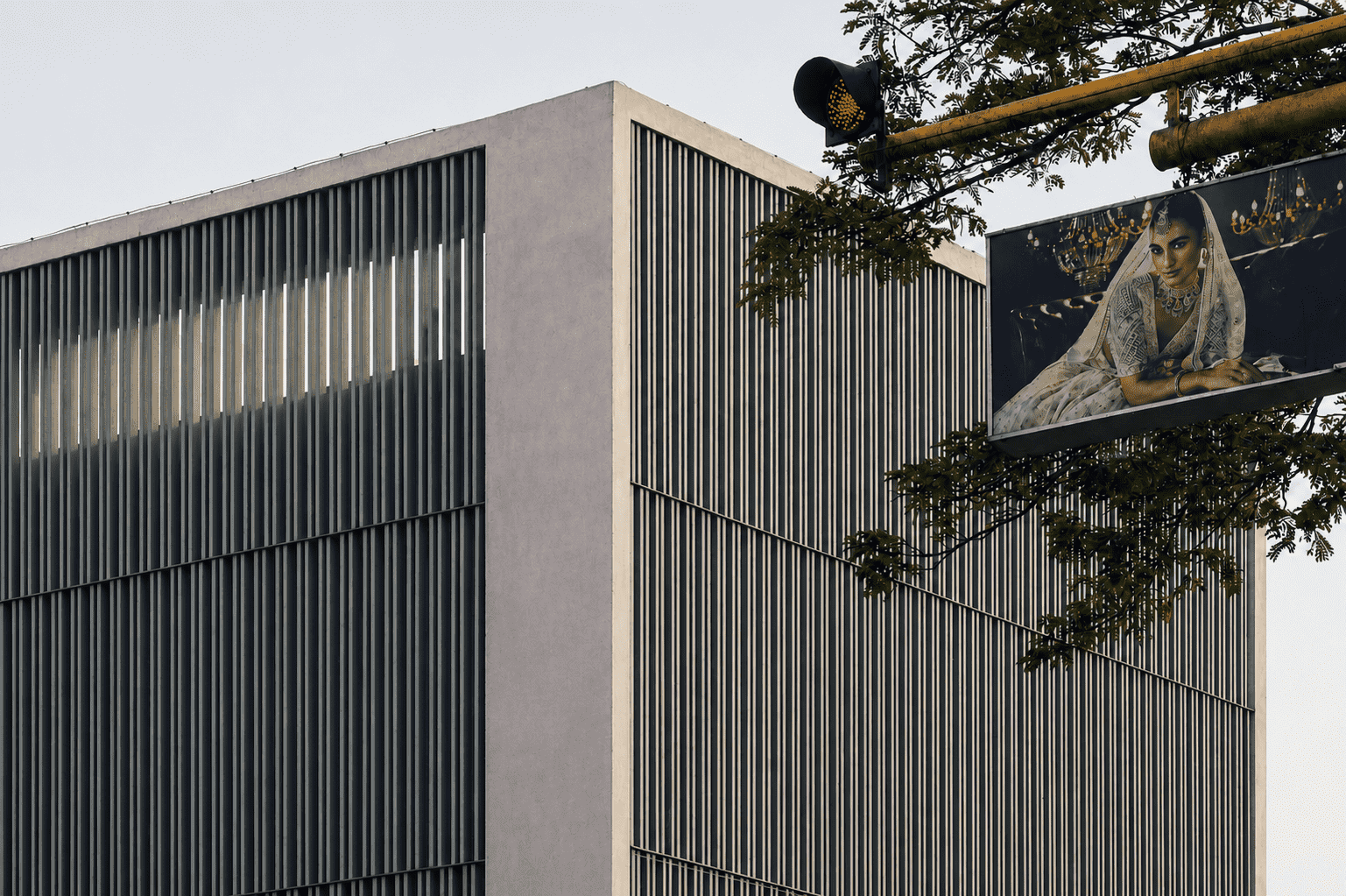
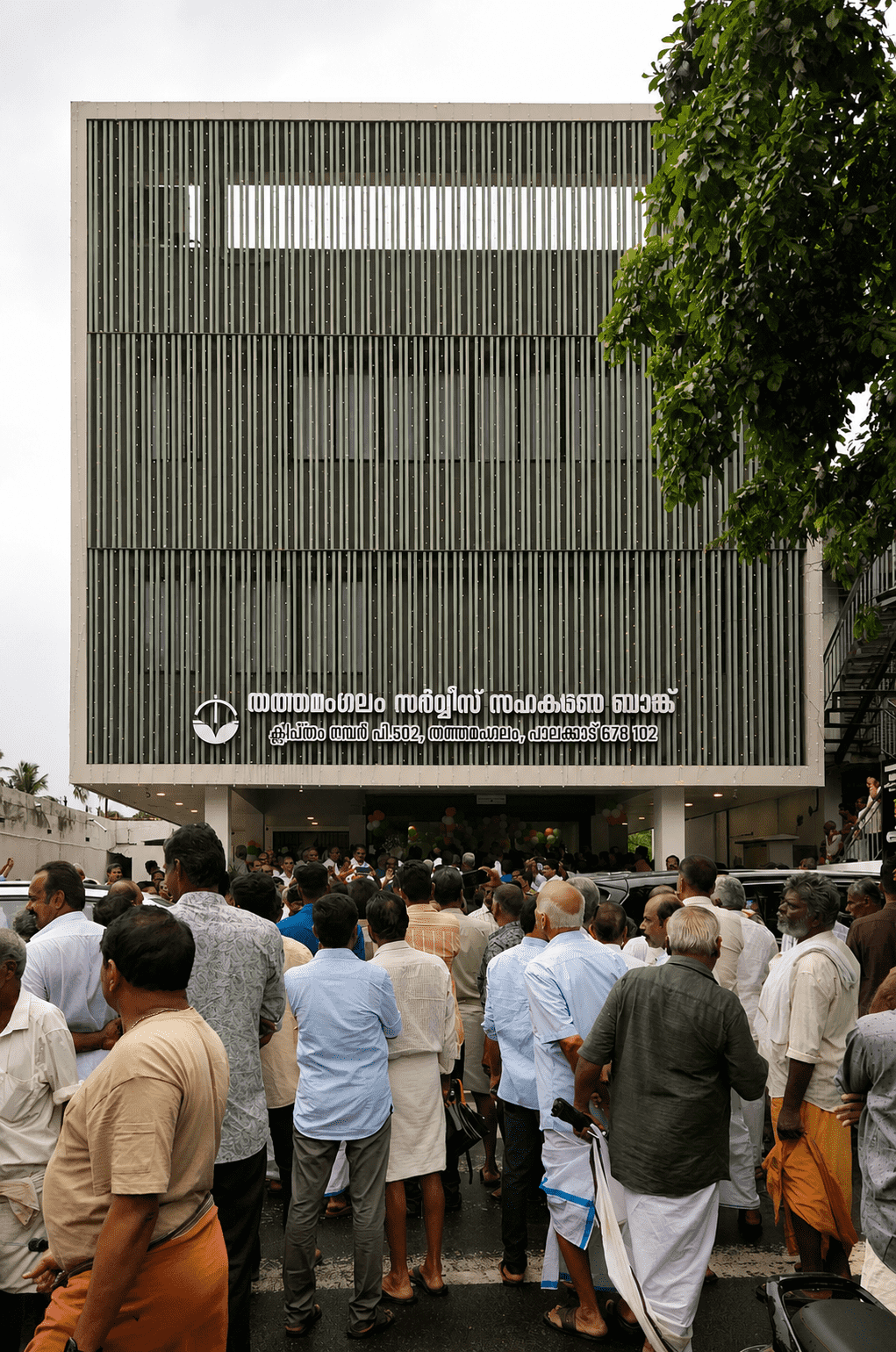
Rooted in traditional architectural principles and expressed through a contemporary material language of concrete, steel, and glass, the building bridges past and present. Vertical steel grills on the fa9ade reinterpret traditional elements, establishing continuity with the town’s architectural identity while offering a scalable and adaptable language for future commercial buildings in the region.